How Overseas Pakistanis Can Buy Lahore Files Safely

Buying property from another country creates risks that local buyers can often resolve through a quick office visit. An overseas investor must assess documents, seller credibility, market price, and transfer requirements from thousands of kilometers away. This makes Lahore files attractive for their lower entry cost, but also easier to mishandle when decisions depend on forwarded scans or verbal assurances. A safe purchase requires more than appointing a relative and sending money. You need a verified file, a clearly defined representative, documented payments and an exit plan that fits your timeline. This guide explains how overseas Pakistanis can structure the process without surrendering control of the transaction.
Who Should Use This Buying Process?
This process is designed for non-resident Pakistanis who cannot personally visit Lahore before every property decision. It is particularly useful for first-time buyers, investors using foreign savings and families appointing a relative or representative in Pakistan. It also suits overseas Pakistanis who expect to visit later but want to shortlist opportunities before traveling. Completing research in advance can reduce pressure during a short trip. However, no buyer should rush because a dealer claims a rate is available for only one day.
Why Overseas Buyers Face Different Risks
Distance changes how buyers evaluate a property deal. A local buyer can visit an office, inspect original documents and speak with several dealers on the same day. An overseas buyer may receive selected information through calls, screenshots or recorded videos.
Remote Communication Can Hide Important Details
A clear scan can confirm what appears on a document, but it cannot prove the document is genuine, current, or owned by the person offering the file. The same listing may also circulate through several dealers at different rates. Ask for the seller’s identity, file category and complete document trail before discussing token money. Resolve any inconsistency in names, dates, file size, or document type through the relevant authority rather than explain it informally.
Family Trust Is Not a Verification System
Many overseas buyers appoint a relative because they trust that person personally. Trust is valuable, but your representative may not understand allocation letters, intimation documents, outstanding dues or transfer procedures. Give the representative a written role. State which documents they may submit, which payments they may make and which decisions require your approval. This protects both the buyer and the person helping in Pakistan.
Market Rates Can Be Presented Selectively
An overseas buyer may see the highest advertised rate without hearing the strongest genuine buyer offer. This creates an inflated impression of market value and potential return. Compare several quotations for the same phase, size and file type. Ask for recent completed-deal ranges, not only seller demands. Your purchase should remain sensible even if the file cannot be resold at the highest quoted figure.
How to Buy Lahore Files From Abroad
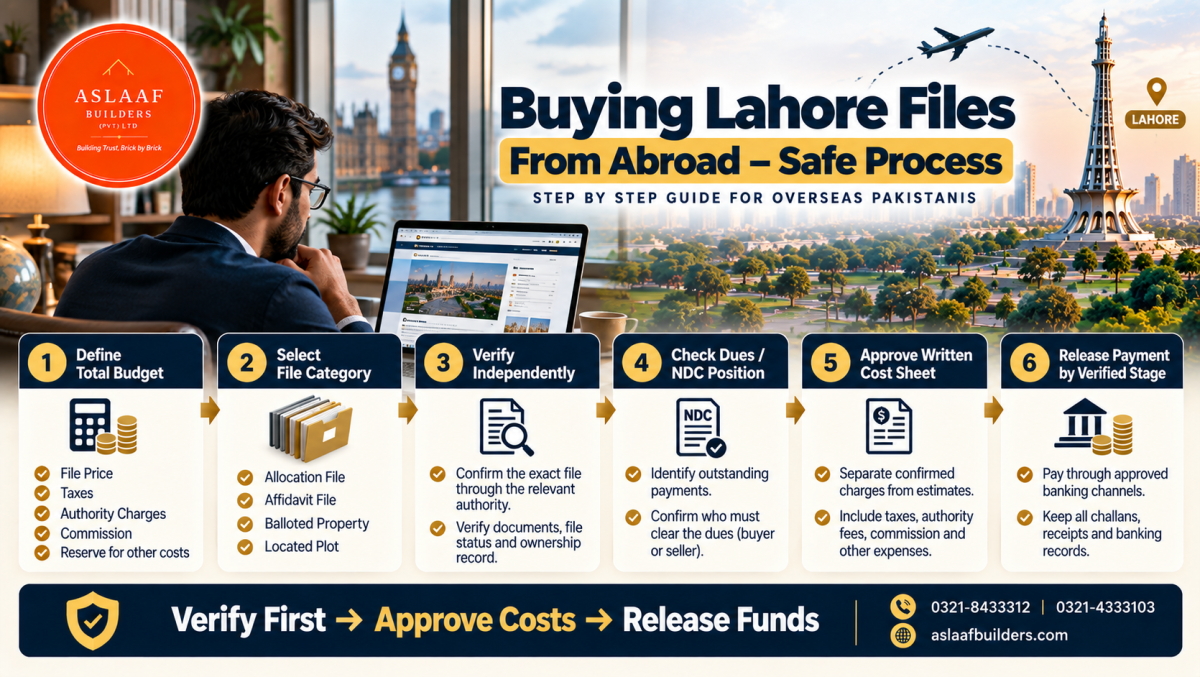
Buying Lahore files remotely should follow a controlled sequence. The purpose is to separate market research, document verification and payment approval instead of allowing all three to happen during one sales call.
Define the Investment Before Selecting a File
Decide your maximum total budget in Pakistani rupees. This figure should include the file price, taxes, authority charges, commission, documentation and a reserve for verified expenses. Set a realistic holding period as well. If you may need the money within one year, an early-stage file with an uncertain development schedule may not suit you. Exchange-rate movement should not be the only reason for making a property decision.
Shortlist by File Type and Development Stage
Ask whether the opportunity is an allocation file, affidavit file, balloted property or located plot. Do not treat these categories as interchangeable because their documentation, certainty, and pricing can differ. Then assess what must happen before the investment becomes more attractive to another buyer. That event may involve official development progress, balloting, location assignment or possession. Avoid relying on an announcement that the relevant authority has not made.
Verify the Property Independently
DHA Lahore lists property verification as a formal service. Its published procedure requires copies of the allocation, intimation or allotment letter, along with identity documentation. An authority representative can also attend the verification process. Verification should confirm the exact file being offered, not merely the project name. Ask your representative to retain the official receipt and verification response. A dealer’s own confirmation should not replace the authority’s record.
Confirm the Dues Position
A low asking price can become expensive when outstanding dues appear during transfer. Determine who will clear those amounts and record the responsibility in the written agreement. DHA Lahore describes the No Demand Certificate as the first transfer step through which outstanding objections and dues are cleared. Its process also requires relevant ownership documents and payment vouchers before the transfer appointment.
Approve a Written Cost Sheet
The cost sheet should show the seller’s final demand, government taxes, authority charges, commission and any outstanding dues. It should also identify which figures are confirmed and which remain estimates. Do not approve one combined amount without a breakdown. Currency conversion, bank charges and payment timing may also affect the amount you need to remit from abroad.
Using an Authority Holder Without Losing Control

An authority holder can help submit documents and complete local formalities, but the authority should match the exact task. Giving broad control without understanding its consequences can expose the buyer to avoidable risk.
Use the Correct Authority Document
DHA Lahore’s published procedure for a purchaser abroad refers to an application, identity documents, a paid challan, a notarized authority letter and an undertaking by the purchaser. The exact requirements and charges depend on the property and transfer circumstances. Confirm the latest document format before signing abroad. If embassy, consular or notarization requirements apply to your case, follow the authority’s instructions rather than using a generic power-of-attorney template downloaded online.
Limit the Representative’s Financial Role
Your representative should not be able to change the property, price or seller without written approval. If funds are required, link each payment to a specific verified stage. Ask for copies of challans and official receipts. Keep a record of instructions, approvals and transaction dates in one secure location. This creates a clearer audit trail if any disagreement arises later.
Keep Independent Contact With the Dealer
Don't let every conversation go through one person. Speak directly with the dealer and confirm the agreed rate, commission and seller details yourself. Written communication helps reduce confusion about promises. However, WhatsApp messages are not a substitute for official verification, signed documents or payment records.
Tax Treatment for Overseas Pakistanis
Property taxation can materially change the total purchase cost. Overseas status alone does not remove tax obligations, and the applicable treatment depends on current law and the buyer’s circumstances. FBR states that qualifying overseas Pakistanis may receive filer-rate treatment under Sections 236C and 236K even when they are not on the Active Taxpayers List. Its stated conditions include holding a NICOP or POC and remaining in Pakistan for fewer than 183 days during the financial year. FBR also describes a PSID approval process involving the transferring authority, uploaded identity evidence and verification by the concerned Commissioner. Tax rates can change through finance legislation, so confirm the current rate and procedure with FBR or a qualified tax professional before transfer.
Payment Rules That Protect the Buyer
A property payment should clearly connect the buyer, seller, file, and agreed transaction stage. Informal transfers to unrelated accounts make that connection harder to prove. Use documented banking channels and confirm the account holder before sending funds. The token receipt should identify the parties, property category, amount, remaining payment, verification conditions and refund position if the documents fail scrutiny. Do not send the complete purchase amount merely because document scans appear correct. Release funds only after verifying milestones, and keep evidence of every payment.
Warning Signs Overseas Buyers Should Not Ignore
Remote investors can reduce losses by treating pressure and secrecy as risk signals. One unusual detail may have an explanation, but several warning signs together should stop the transaction. Be cautious when:
The seller’s name does not match the ownership documents
The dealer refuses independent authority verification
Only cropped photographs of documents are provided
The asking rate is far below comparable market offers
Token money is demanded before checking the file
Payment is requested in an unrelated person’s account
The file type changes during the conversation
Balloting or possession is presented as guaranteed
Commission and transfer costs remain unclear
Your representative is discouraged from visiting the authority
Walking away from an unclear deal is cheaper than trying to repair an invalid or disputed transaction later.
Conclusion
Overseas Pakistanis can invest in Lahore files without being physically present at every stage, but distance should never reduce verification. Define your budget and holding period before choosing a file. Confirm the seller, original documents, dues position, authority requirements and complete acquisition cost before releasing funds. Your representative should perform a limited, documented role while you retain control of price and payment decisions. Aslaaf Builders provides indicative market information and buyer guidance for Lahore property decisions. Follow Aslaaf Builders on Facebook, LinkedIn and X for property updates, and request current verification before committing.
FAQs About Lahore Files for Overseas Pakistanis
These questions address the practical concerns that commonly arise when a buyer cannot attend each stage personally. The exact process can still vary by authority, document type and individual circumstances.
Can an overseas Pakistani buy a Lahore file without visiting Pakistan?
A purchaser abroad may be able to complete relevant formalities through an authority holder, subject to the applicable authority’s requirements. Confirm the current procedure and required attestations before preparing documents.
Is a NICOP enough to receive filer-rate tax treatment?
FBR identifies NICOP or POC ownership and non-resident status as conditions for its overseas facility. Approval also involves a prescribed PSID and verification process. Confirm your eligibility for the transaction date.
Should token money be paid before file verification?
A buyer should avoid paying a non-refundable token before verifying the file, seller and dues position. If a conditional token is necessary, clearly state the refund terms.
Can a relative verify the file on my behalf?
An authority holder can participate in DHA Lahore’s verification process by providing the required identity and authorization documents. Confirm the authority’s current format and scope before appointing the representative.
Are Lahore files suitable for every overseas investor?
No. Files may suit buyers with surplus capital, patience and tolerance for development uncertainty. Those needing rental income, immediate construction, or quick access to funds may need a different property category.


0 Comments