DHA Lahore Corner vs Park-Facing Plots: Is The Premium Worth Paying?
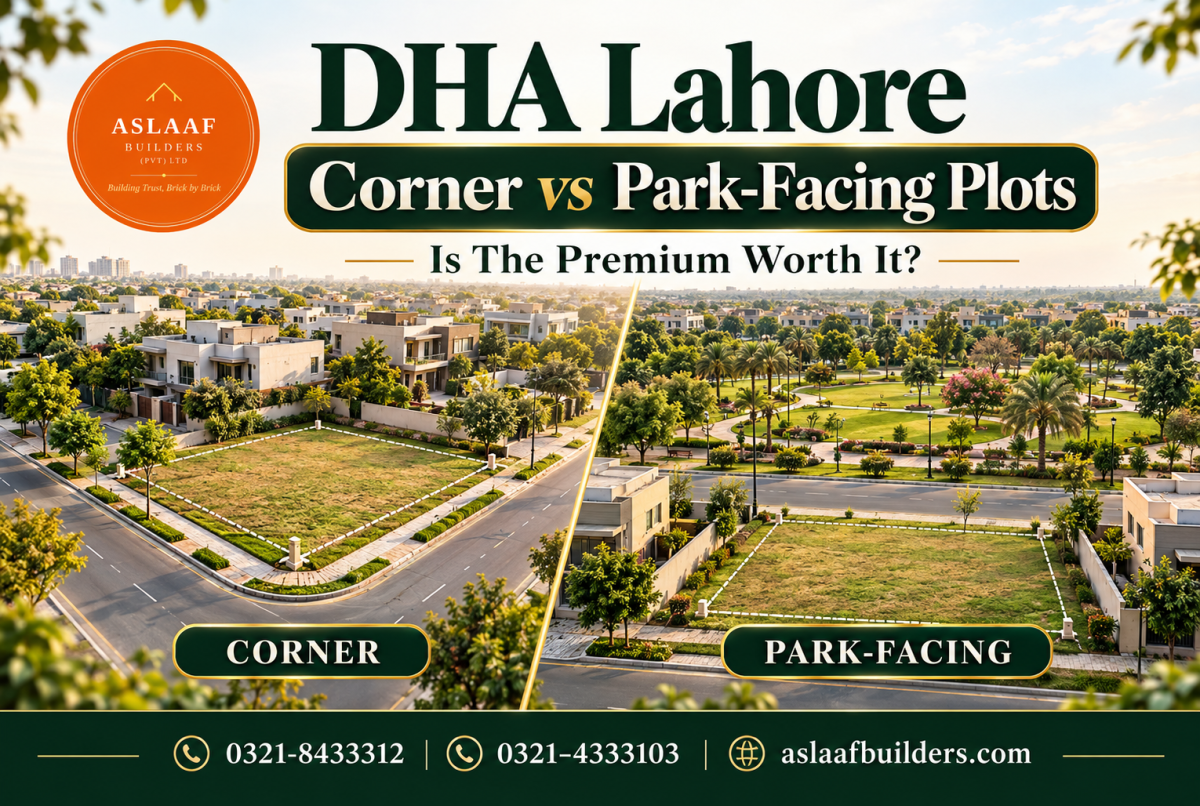
A corner plot can look better on a listing. A park-facing plot can sound like the obvious family choice. Neither label tells you how the location actually works. A busy junction may affect privacy and comfort. A park entrance may bring evening traffic. Inspect the exact position before accepting the seller’s premium. The DHA Lahore corner vs park-facing plots comparison needs practical questions. How will you use the property? Which advantages will your family enjoy? What does the proposed design actually permit? How much extra will you pay after all costs? This guide helps you connect the location claim with a justified buying decision.
What Are You Paying Extra For?
A corner plot sits beside intersecting streets. A park-facing plot faces a park. Some properties may combine both features. Others may only sit near a park. Do not treat “near park” as equivalent to “park-facing.” Confirm the exact position through the applicable plan and site visit. The seller’s premium is part of the negotiated demand. An authority’s location charge is a separate account question. The two amounts should not be confused. Ask whether any applicable authority charge has been paid. Confirm what the seller’s quoted amount includes. Compare complete costs after resolving those details.
Do Not Apply One Premium Percentage Everywhere
A project-specific percentage is not a universal resale rule. DHA Lahore’s overseas-ballot FAQ provides an example. It specifies extra corner charges for that particular offering. That does not establish the premium for every DHA Lahore plot. Check the category and terms applicable to your property. Use current authority records for any additional charge.
Corner Plots: Check The Design Opportunity

A corner position may offer useful design possibilities. Two street-facing sides can influence room placement and elevations. Your architect should assess the actual orientation. Plot dimensions still determine the recorded land area. Roadside space does not automatically belong to the owner. Confirm boundaries before counting any additional lawn or parking area.
More Exposure Does Not Mean More Owned Land
Ask for a preliminary layout before paying a design premium. Check the applicable building requirements with your architect. Identify usable rooms after required open spaces and circulation. Assess driveway access and the permitted entrance arrangement. Do not assume two streets guarantee two usable gates. The approved design should support the advantage you are buying.
Visit The Junction During Busy Hours
Watch how vehicles turn beside the plot. Look for stopping points and regular roadside parking. Assess headlights after dark. Note activity on both adjoining streets. Consider where bedrooms would sit in the proposed design. A quieter corner can feel very different from a busy intersection.
Park-Facing Plots: Inspect The Actual Outlook
Check the park’s location on the relevant official plan. Then inspect what exists on the ground. Identify roads and other spaces between the plot and park. Look at the outlook from the proposed living areas. Ask your architect to assess the future viewing position. An attractive label does not guarantee a useful view from every room.
Verify The Park and The Viewing Position
Do not infer an uninterrupted future outlook from current photographs. Ask the authority about the adjoining land use. Treat informal promises about future changes cautiously. Record what is confirmed and what remains uncertain. Avoid paying for an advantage that cannot be explained clearly. Your comparison should use the existing position and verified planning information.
Observe Activity Near Entrances and Play Areas
Visit during the hours your family would normally be home. Observe park use and nearby vehicle movement. Check where visitors gather or park. Consider noise around activity areas and entrances. Inspect street lighting after dark. Decide whether the actual surroundings suit your preferred routine.