DHA Islamabad Extra Land: Can You Build on The Additional Area?
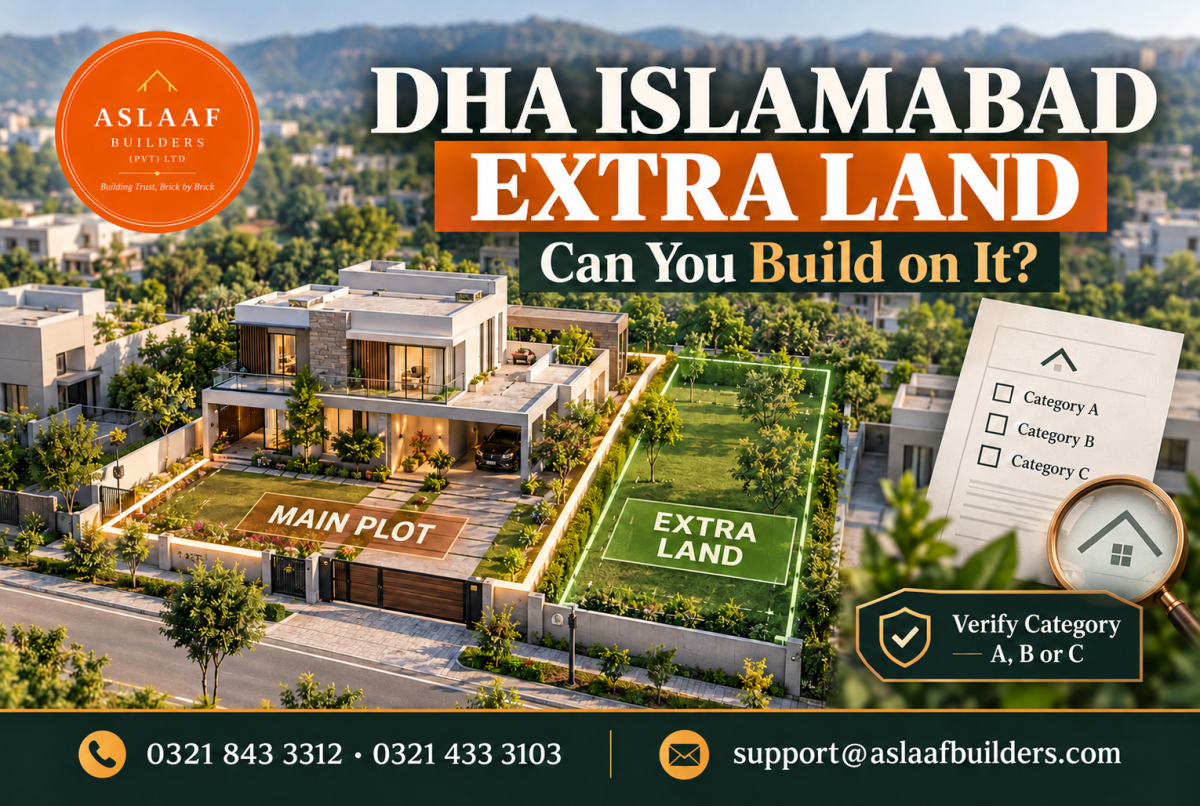
DHA Islamabad extra land can make a plot look more attractive. A wider frontage or open strip creates possibilities, but the category determines what you can use it for. Additional space does not automatically permit an extra bedroom, garage or extended kitchen. You need to establish its approved use and treatment when ownership changes. At Aslaaf Builders, we assess those rights before treating extra area as a property advantage.
Can You Build on Extra Land in DHA Islamabad?
The direct answer depends on the recorded category and permission. DHA’s published revised bylaws prohibit construction on extra land unless its category changes to constructible. Ask Town Planning to confirm the position of the specific area. Do not commission a house extension based only on an agent’s description. Establish what the records allow before your architect includes the land in a design. This guide uses DHA Islamabad-Rawalpindi’s published guidance; confirm any later amendments for your property.

Understand Categories A, B and C
DHA’s official FAQs describe Category A as constructable land. They describe Category B as non-constructable and Category C as trapped, non-constructable land. The distinctions matter more than the phrase “extra land paid.” Payment evidence needs to match the allocation and its conditions. Ask the seller for the relevant documents, then verify them with DHA. A category claim in an advertisement remains a seller’s claim until the property records support it.
Why “Extra Land Paid” Does Not Answer Every Question
Extra-land listings often emphasize size, openness and possible lifestyle benefits. A reviewed Zameen advertisement describes a five-marla plot with approximately five marla of additional land behind it. That wording explains the seller’s proposition but does not verify the land category. It also does not establish a ten-marla building entitlement. Treat any similar advertisement as the beginning of your checks. The useful question is what documents support the advertised area and its proposed use.
Separate The Main Plot From The Additional Area
Write down the main plot’s recorded size before assessing the extra land. Then identify the additional area, category and allocation reference separately. Compare those details with the site plan and the physical boundary. A lawn behind a wall does not establish the approved boundary. Ask DHA to clarify any difference between the documents and the site. Keep the areas separate until the records justify another treatment.
Check What Happens When The Property Changes Hands
DHA’s published bylaws reserve withdrawal rights over Categories B and C and include sale-related retrieval provisions. Annex E also contains restrictive wording on selling green-area land as part of a plot. The document includes a condition concerning land attached to a constructed house. Ask Transfer and Record and Town Planning for written case-specific clarification. Do not assume the seller’s existing arrangement automatically becomes yours. Make that answer part of your purchase decision.
Ask About Your Position as The Incoming Owner
Explain to DHA whether you intend to buy an open plot or a completed house. Identify the extra-land category and provide the allocation documents. Ask whether the proposed transfer preserves any use rights, requires a fresh process or changes the arrangement. Request confirmation of outstanding charges and the documents the incoming owner needs. If the seller promises future approval, treat that approval as pending. Agree on how the transaction will handle an unsatisfactory verification result before making a payment.
Verify Documents Before Paying an Extra-Land Premium

Start with the property identity and the seller’s authority to sell. Request the allotment documents, extra-land approval, payment evidence and available site plan. Compare the plot number, street, sector and area across the records. Ask DHA which documents currently establish the allocation and permitted use. Do not rely on a receipt without understanding what the payment covers. Keep written confirmation with your purchase file so the decision rests on verifiable details.
Test Your Design Against The Approved Use
Give your architect the verified documents rather than the listing screenshot. Explain whether your aim involves more bedrooms, a larger lawn or additional parking. Ask for a concept layout that identifies the main plot and additional area separately. Check whether your essential rooms fit within the permissible design. If the design depends on a pending category change, consider an alternative that does not rely on it. This protects your building brief from an uncertain approval outcome.
Do Small Structures Need Separate Attention?
The published bylaws allow a gazebo or covered sitting area up to 150 square feet using specified materials, subject to setbacks and Town Planning approval. This limited provision does not authorize a room extension. Show DHA the precise proposal before ordering the structure. Ask your designer to identify its footprint, materials and location. Keep the written approval with the drawings. A neighbor’s installation does not establish permission for your plot.
Decide Whether the Extra Land Justifies Its Price
Evaluate the additional space against the benefit you can confirm. A permitted garden area can matter to a family that values outdoor living. It contributes differently from approved space that supports the required house layout. Neither benefit justifies assuming a guaranteed resale gain. Compare similar properties and ask how the seller explains the premium. Your offer should reflect documented rights, site conditions and your intended use.
Use a Simple Premium Test
Suppose one seller asks PKR 3 crore and a comparable alternative asks PKR 2.75 crore. The difference equals PKR 25 lakh. These assumed figures illustrate a comparison, not current DHA Islamabad prices. Check how much of the difference relates to location, road position or property condition. Then judge the remaining extra-land premium against its verified usefulness to you. Include any professional assessment or site work in the total cost before deciding.
Conclusion
DHA Islamabad extra land deserves a separate assessment within every property purchase. Verify its category, boundaries and permitted use before assigning it a price premium. Check the transfer position instead of assuming the seller’s arrangement continues unchanged. Give your architect confirmed records and keep uncertain approvals out of your essential house plan. At Aslaaf Builders, we encourage buyers to add space with documented rights and real value. Contact our team with the phase, sector, main plot size, claimed extra area and your building requirements to discuss the property considerations.
FAQs About DHA Islamabad Extra Land
Can I build a room on category B extra land?
DHA’s FAQs classify Category B as non-constructable. Verify any proposed category change and obtain the required approval before including a room in your design.
Does paying for extra land make it constructable?
A payment receipt alone does not establish the category or building permission. Verify the approved records and conditions directly with DHA.
Can a seller transfer extra land with the plot?
Transfer treatment requires case-specific confirmation. Ask DHA how the category, allocation conditions and open-plot or constructed-house status affect the proposed sale.
Is extra land the same as a larger main plot?
Do not assume that it is. Compare the recorded main plot entitlement with the additional land’s separate allocation and permitted use.


0 Comments