Buying a Solar-Powered House in DHA Lahore? Check What Comes With It
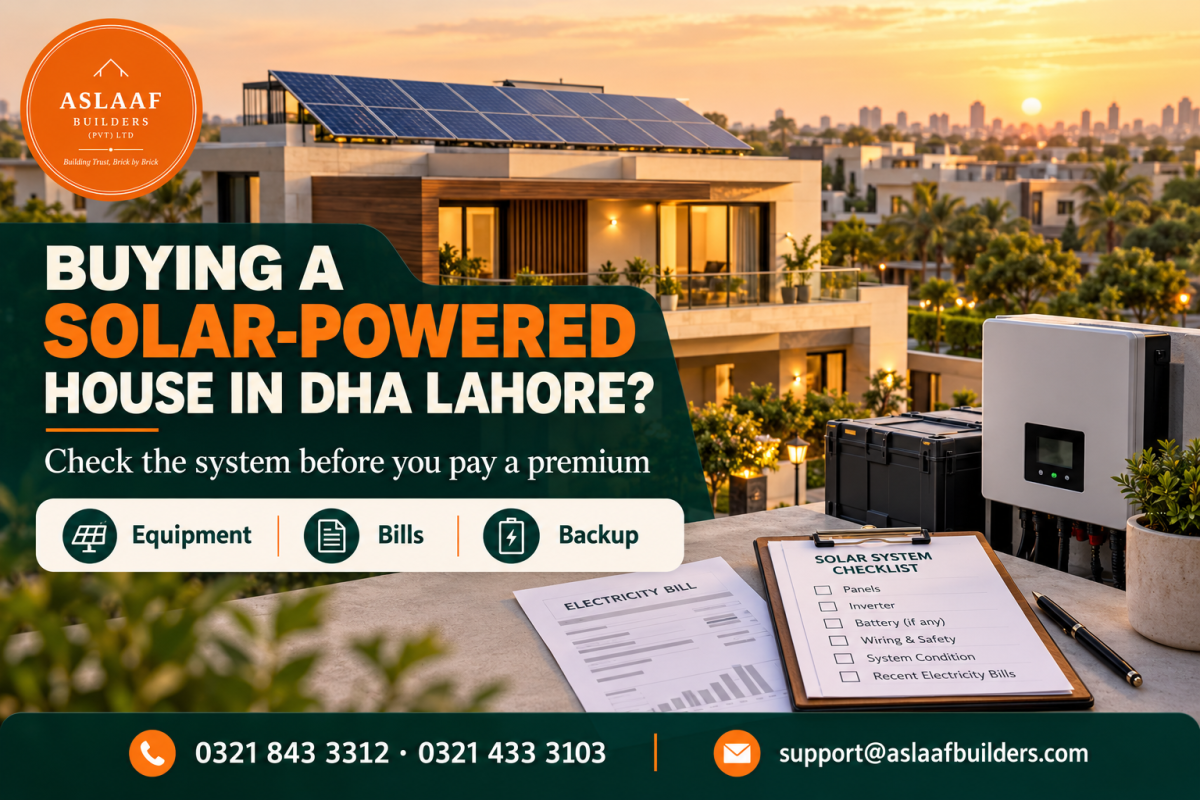
The seller shows you a low electricity bill, points to the panels on the roof and adds a premium to the asking price. It sounds like a ready-made saving. But the bill belongs to another household, and you still do not know which equipment stays with the house or whether the system provides backup when the grid fails. Buying a house with solar panels in DHA Lahore calls for a closer look at the installation, its paperwork and the electricity account. Do those checks before you put a value on the system.
Start With an Equipment List, Not the Panel Count
List the panels, inverter, batteries, mounting structure and monitoring equipment included in the sale. Note models, capacities, installation dates and serial numbers where available. Compare the list with invoices and the equipment on site. A roof full of panels says little about inverter age or whether batteries stay. Put the agreed items in the sale documents.
Check Who Owns the System

Request the invoice and proof of ownership. Ask about unpaid installer charges, a maintenance contract and equipment installed by a previous owner. If paperwork is missing, ask the installer to confirm system details. A warranty booklet alone proves neither ownership nor remaining cover. Record the included components clearly in the transaction documents.
Ask DHA for the Installation Paper Trail
DHA Lahore’s solar installation guidelines call for a proposal to be submitted for DHA scrutiny and approval before installation. The guidelines address rooftop placement, structure, waterproofing, earthing and a lightning arrester. They also list documents such as the vendor’s structural stability and commissioning certificates and a LESCO NOC or bill showing the distributed-generation load. Ask the seller for the approvals and records that apply to this particular installation, including any later expansion. If documents are missing, confirm the present status with DHA Building Control rather than assuming a visible system has approval.
Look at the Roof Beneath the Panels
A tidy row of panels can hide holes, patched waterproofing or a drain that is difficult to reach. Check for stains on the ceiling beneath the installation and ask about repairs after heavy rain. Look at the mounting structure safely; leave electrical and structural checks to qualified professionals. DHA’s guideline specifically requires roof waterproofing to prevent seepage and describes anchoring and structural documentation. A qualified solar installer or engineer can assess concerns before you price the house. Do not climb onto a fragile roof or touch live wiring during a viewing.
Read the Electricity Bills Alongside the Solar Data
Ask for several recent LESCO bills, including summer and winter months if the seller has them. Check the account address, sanctioned load, import and export readings where applicable, outstanding dues and any credits carried forward. Compare those bills with the inverter or monitoring app’s generation history. A low bill may reflect light household use, a credit from an earlier period or a different routine from yours. It cannot predict your cost when you add air-conditioners, work from home or use more power at night.
Separate Self-Use, Export and Backup
These are three different benefits. Panels can supply part of the household’s daytime electricity. An approved grid-export arrangement can credit electricity sent to the distribution network under the agreement that applies to that account. Batteries and a properly configured hybrid system may keep selected circuits running during an outage; a grid-tied system without suitable backup does not automatically do that. Ask the installer to show which lights, fans or other circuits stay on when grid supply is safely isolated. Have a qualified technician test the claim, not by pulling wires or operating equipment yourself.
Pakistan’s NEPRA legal page lists the 2026 Prosumer Regulations and subsequent amendments. The 2026 regulations describe billing for imported and exported energy under a net-billing arrangement, while existing agreements and later changes require careful treatment. Ask the seller for the actual agreement, approval or concurrence record, and current LESCO bill. Then ask LESCO how a sale and change of consumer name affect this specific account and export arrangement. Do not assume the previous owner’s billing treatment just because the meter remains in place.
Test the System as a Buyer Would Use It
Visit during daylight and ask the installer to explain the operating display. Record inverter warnings and compare the monitoring history with bills. Ask about panel cleaning, servicing and battery age. Have a technician assess usable battery capacity where relevant. One sunny-hour reading cannot establish long-term performance.
Get an Independent Technical Check When the Stakes Are High
An independent inspection helps when records are incomplete or solar accounts for a large price premium. Ask a qualified professional to check equipment, roof mounting, protection, earthing and battery condition against the documents. Request written findings, especially after unrecorded expansions or unexplained monitoring gaps. Price the actual system, not the advertised capacity.
Put the Handover in Writing

Before final payment, record the components, electricity dues and documents the seller must hand over. Collect monitoring access, manuals, warranties, installer contact and equipment-room keys. Photograph the meter reading at possession. Confirm with LESCO how the consumer-name change and export-account formalities will proceed. Resolve any material approval or performance claim before accepting a solar premium. For a broader discussion of value, read our guide to solar and Lahore property prices. Browse houses for sale, then tell Aslaaf Builders your DHA phase, budget and whether backup power is essential. Request solar records before a viewing and use qualified professionals for the final assessment.
Conclusion
A solar-powered house can be a strong fit when the system matches how your family uses electricity. Start by confirming what equipment you're buying and who owns it. Check DHA records, roof condition and the installer’s certificates before treating the panels as a finished asset. Read the property’s LESCO bills beside generation history, and separate daytime savings from grid exports and outage backup. Confirm the account’s current terms and ask LESCO what happens when ownership changes. With those answers in writing, you can judge the house and its solar system on evidence rather than an attractive bill.
FAQs About Buying a Solar-Powered House in DHA Lahore
Do solar panels automatically provide backup during load-shedding?
No. Backup depends on the system design, inverter, batteries and circuits connected for backup. Ask for a technician-led demonstration and the equipment specifications. A low electricity bill or an export meter does not prove the house will have power during an outage.
Does the seller’s old electricity bill show what I will pay?
It shows that household’s billed use and credits for a particular period. Your occupancy pattern and the account’s applicable terms may differ. Review several bills, the solar generation record and the actual agreement, then confirm the ownership-change process with LESCO.
What DHA solar documents should I request?
Ask for the relevant approval, installation proposal, vendor records, structural stability and commissioning certificates, and any LESCO document associated with the installation. DHA’s published guideline identifies these kinds of records. Confirm what applies to the exact house and any later system changes with Building Control.
Can I rely on the seller’s warranty claim?
Read each manufacturer’s and installer’s terms. Check the invoice date, covered component, remaining period and any transfer condition with the issuer. Record the agreed equipment and warranty papers in the handover file. Do not treat one warranty card as cover for the whole system.


0 Comments