Buying a DHA Karachi Apartment? Walk the Fire Escape Before You Pay
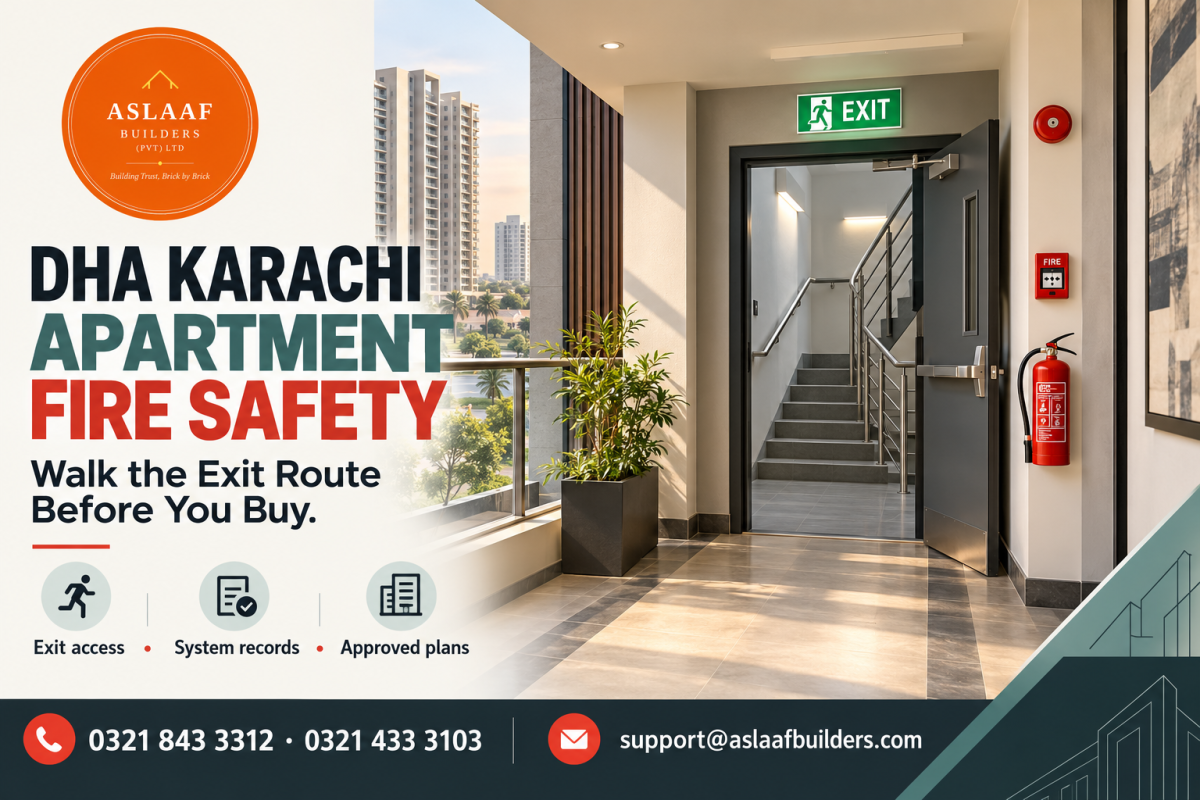
The apartment has the right view, a clean lobby and a lift that reaches your floor in seconds. You ask about fire safety, and the agent points to an extinguisher near reception. That is one useful detail, but it cannot tell you how your family would get outside if the lift stops and the corridor fills with smoke. When buying a DHA Karachi apartment, walk the full exit route before you pay. Then ask the people who manage the building to show how its safety systems are maintained.
Walk From the Apartment Door to the Street
Start at the exact flat you want to buy. Find the staircase and follow it down to an outdoor exit or another safe discharge point. Check whether doors open, signs are visible and the route remains clear of stored boxes, bikes and building material. Notice any locked gate that would require a key you might not have in an emergency. Do not assume a door labeled “fire exit” leads to a usable route. If staff say the staircase stays locked for security, ask management to explain the approved access arrangement. The Building Code of Pakistan’s fire safety provisions address clear marking and lighting of escape routes. DHA Karachi’s building regulations also call for firefighting and exit plans to be submitted for approval before construction. These publications raise serious questions for the building manager; they don't let a visitor certify compliance. Ask for the approved plan and a qualified assessment where the route raises concerns.
Check the Staircase at Every Level

Walk more than one flight if access is permitted. See whether doors are damaged, wedged open or blocked by furniture. Look for emergency lighting, exit signs and a clear path at the ground floor and basement levels. Ask how the building keeps the stairs free during renovations and deliveries. A beautiful lobby is irrelevant if the escape route ends at a shutter or a crowded storage room. Bring a family member who would actually use the stairs, especially if mobility is a concern.
Look Beyond the Extinguisher on the Wall
Ask management which fire systems serve the building: alarms, detectors, extinguishers, hose reels, standpipes, pumps or other equipment as applicable. Check whether visible extinguishers have service tags and whether the equipment is accessible, not hidden behind locked cupboards. Ask for recent inspection, testing and maintenance records. A red cylinder or alarm button establishes that equipment exists, not that it works today. The required systems depend on the approved building design and applicable rules, so don't judge every tower by one generic checklist.
Ask What Happens When Electricity Fails
During a fire, a power cut can make an unfamiliar corridor harder to navigate. Ask what powers the emergency lights, exit signs, alarm and any fire pump when the main supply fails. Request the date of the last relevant test and ask who responds to a fault. Check whether the building has a staffed control point or a documented emergency contact. A basement generator does not prove that every safety system is connected to backup power. Management should be able to explain its arrangement without guessing.
DHA Karachi’s regulations set out fire precautions for different plot and building categories and refer to the national fire safety code. They list exit signage and emergency lighting as requirements for specified commercial or amenity buildings, along with other equipment. Do not lift a single requirement out of that category and declare it mandatory for every apartment. Ask DHA Town Planning and Building Control, the relevant cantonment authority and a fire professional what applies to the exact project. The buyer’s job is to identify missing evidence and unsafe-looking conditions before committing.
Ask for the Approved Fire and Completion Papers
Request the approved building plan and its firefighting or exit drawings. Check that the floor, staircase and routes you saw correspond to the plans. Ask for relevant stage-wise NOCs and the building’s completion documentation. DHA Karachi’s construction NOC page lists firefighting-system verification at the stair-tower stage. Its completion-plan procedure describes site scrutiny and forwarding to Cantonment Board Clifton, which issues the completion certificate. An application receipt is not the same as an issued certificate.
Check Changes Made After Approval
Some buildings change their corridors, shops, storage areas or access controls after occupants move in. Ask whether later alterations affected the approved escape route or fire equipment. Compare the current floor with the approved drawing and ask for revised approval where a material difference appears. Ask current residents about blocked stairs or recurring alarm faults, but verify their accounts against management records. A compliant plan on paper cannot fix a door that residents cannot open. Similarly, one untidy corner doesn't prove the entire project is unsafe; get the facts checked.